


 Contact us

Some issues at stake in the current visit of the Prime Minister of Burkina Faso to Venezuela
May 13, 2023 · Issaka OUEDRAOGO
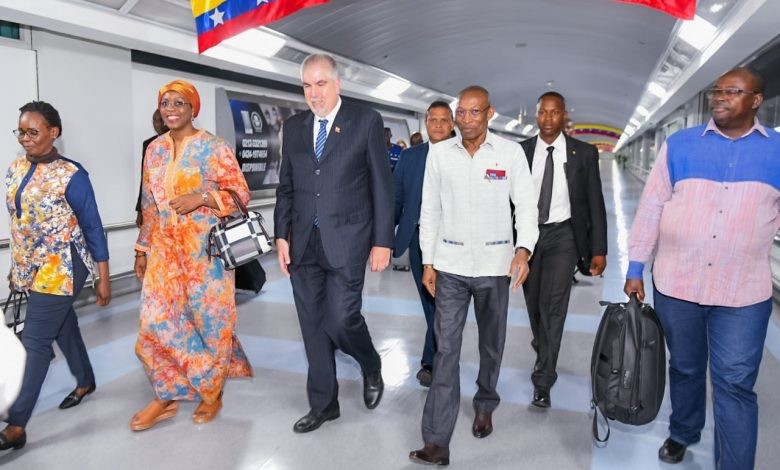
Burkinabe Prime Minister Apollinaire Kyelem de Tambèla has been in Venezuela since May 9, 2023, where he is on a friendship and working visit according to the services of the Burkinabe Prime Minister's Office. During his stay scheduled until May 14, Tambèla is expected to meet with several members of the government with a view to strengthening cooperation ties between his country and Venezuela in key areas such as agriculture, mining, education, health, culture and defense. The news portal, hashtag#Lefaso.net, also mentions that the Prime Minister could express Burkina's interest in Venezuelan oil, whose reserves are among the largest in the world. This first trip by Tambèla to Latin America is part of the dynamic reorientation of Burkinabe foreign policy, which is gradually turning away from its former Western allies to new security partners closer to the Sino-Russian bloc. This trend, driven by the rise to power of Captain Ibrahim Traoré, has recently pushed Burkina Faso to revive its diplomatic relations with North Korea. Traoré confirmed in a recent interview that the rapprochement with Pyongyang aims, among other things, to facilitate and accelerate the acquisition of weapons for the army, which is still under-equipped in the face of jihadist attacks affecting the majority of Burkinabe territory. Similarly, the Ouagadougou - Ankara axis was also revived during Traoré's presidency by the acquisition of several Turkish TB2 drones. The government has just granted a sovereign guarantee of more than $420 million to hashtag#IBBankInternational, an entity of the hashtag#EBOMAF group created by the very wealthy businessman, Mahamoudou Bonkoungou, to cover the acquisition of new equipment for the army from the Turkish company Raykar Makina. This partnership is expected to sustainably consolidate Turkey's influence and interests as Burkina Faso's new preferred partner in its counterinsurgency strategy against armed groups. Turkish media have echoed, for example, the fact that, in the wake of this, the CEO of the Turkish manufacturer received at the end of April, "the country's highest national distinction, on the instructions of the President of Burkina Faso, Ibrahim Traoré, for his exceptional contributions to peacekeeping, security and counterterrorism activities in this country." In addition, Prime Minister Tambèla also visited Moscow twice. Russia is now considered a key partner in the Burkinabe transition. Asked about relations between Moscow and Ouagadougou, Tambèla replied: "At present, relations are not very advanced. In the past, we had much more close relations, but these subsequently deteriorated. We would like these relations to be further strengthened. This is the reason for my presence here in Moscow." When asked what areas of cooperation he would like to develop, he replied: "all possible areas" and in particular "support from Russia in the fight against jihadists". This new trip by the Burkinabe Prime Minister to a country whose relations with Western countries are notoriously conflictual, reinforces the perception of a new geopolitical time in Ouagadougou characterized by an assumed anti-Western stance marked by the hardening of relations with the former French colonial power. The denunciation of the 1961 military agreement with France, the departure of the special forces of Operation Sabre and the suspension of the media France 24 and RFI are evidence of this fact. An assessment of the advisability and viability of these decisions as well as their impact on a possible end to the crisis and a stabilization of Burkina in the medium and long term is still premature. But it is already clear that resolving the security crisis will require an approach that supports development efforts as close as possible to local communities. How then can we articulate the need to raise funds to finance this development without definitively breaking off the essential cooperation, which has become complicated, with the main providers of public development assistance, particularly Western ones? Will the ongoing reorientation of Burkinabe diplomacy produce effects until after the current transitional regime, which is supposed to organize elections in the first quarter of 2024? Whatever the outcome of this transition, the implications of this strategic rearticulation will affect, at the national and sub-regional levels, the strategies and operations of investors and companies, intergovernmental actors as well as humanitarian and development actors involved.
